The northern Italian town of Reggio Emilia has a firmly established worldwide reputation for forward thinking and excellence in its approach to early childhood education.
North American educators have long recognized the importance of the continuing educational development that is taking place in the Reggio model.
It is a constructivist model. That is, it is influenced by the theory of Lev Vygotsky, which states that children (and adults) co-construct their theories and knowledge through the relationships that they build with other people and the surrounding environment. It also draws on the work of others such as Jean Piaget, Howard Gardner and Jerome Bruner. It promotes an image of the child as a strong, capable protagonist in his or her own learning, and, importantly, as a subject of rights.
It is distinguished by a deeply embedded commitment to the role of research in learning and teaching. It is an approach where the expressive arts play a central role in learning and where a unique reciprocal learning relationship exists between practitioner and child.
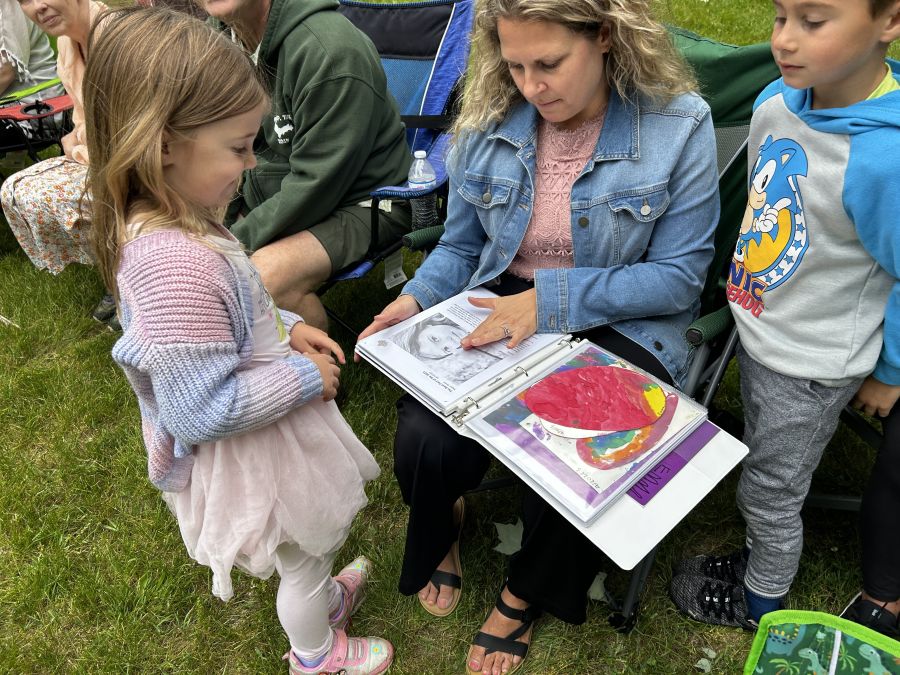
Much attention is given to detailed observation and documentation of learning and the learning process takes priority over the final product. It is a model that demonstrates a strong relationship between educational establishment and community and provides a remarkable program for professional development. For more information about Reggio Inspired Practice and Documentation as Communication please go to IECER.